

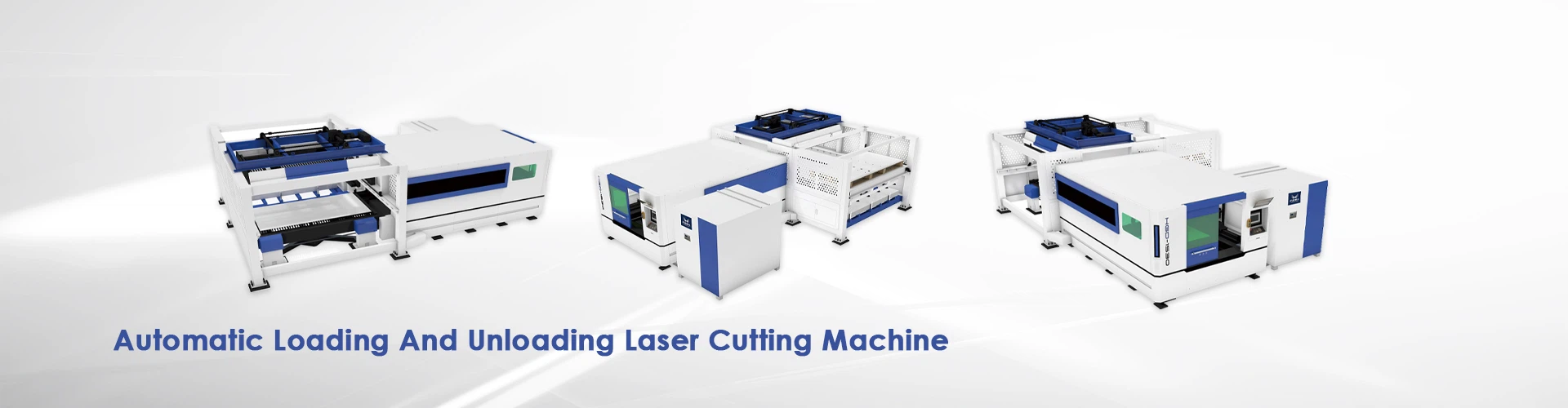
6 Common Laser Cutting And Profiling Problems And Solutions

Knowing and understanding common laser cutting and profiling problems is crucial, especially today. With laser cutting advancing to the ledges of industrialism and technological advancements, having the know-hows in laser products and services can be your source of strength.
In this article, we'll dive deeper into the usual suspects of laser cutting and profiling. We'll tackle some of the known challenges in the practice with the solutions that come with it.
We'll give you a glimpse of some of the most usual hurdles companies experience with laser cutting and profiling. Being in the industry for more than a decade, we here at Cheeron Laser can say we've experienced it all.
Problem #1: Thick Materials May Lead to Poor Quality
One of the main problems is thickness. You see, laser cutting and profiling is like the "sophisticated" version of standard cutting.
There are quite a few material thicknesses and qualities in laser cutting that are challenging. We're talking about specific materials, such as steel, aluminum, titanium, and other similar materials that absorb laser energy differently. This may have an effect on both the quality and speed of the cuts.
Solution
The solution is not as complex as you think. Continuous-operation CNC fiber laser cutting machines are advanced tools designed to tackle a wide range of material thicknesses and types. And yes, this is the solution.
Furthermore, these CNC fiber laser cutters are usually equipped with state-of-the-art technology, automatically adjusting settings as needed. What this does is ensure that each type of material is cut with optimal quality.
Problem #2: Long Preparation Times Required
Now, this is in comparison to other methods/processes. The time needed to prepare everything for welding will have an overall effect to the timeline of the project, especially when special tools and requirements are needed.
Solution
This is a tricky one. Experts recommend using advanced cutting technologies. They said that tools that help create 45° bevel edges and countersinks during the cutting stage can reduce the need for extra weld preparation drastically.
Overall, this not only saves time but also boosts the efficiency of the assembly process.
Problem #3: Turnaround Time, Lead Time, and Overall Efficiency
Many think that just because it involves laser, mean that it's always going to be perfect. Not quite! In fact, finding the right balance between fast production and high-quality standards is a common challenge in laser cutting and profiling.
Because of complexity and sophistication, writing or programming might take a while. This will apply to all projects you have that will need to be cut and profiled.
Solution
The solution is quite simple, but tedious, if you were to ask me. Operating a 24/7, "lights out" production facilities. Furthermore, the facility will have fleets of laser cutting machines for various sizes. What this continuous operation allows is quick turnaround times on projects of all sizes while ensuring high-quality output.
This method significantly cuts down lead times and keeps the quality intact.
Problem #4: Intricate Designs and Detailing
While laser cutters are perfect for any complex design, it's not an easy feat. Achieving accurate and precise cuts is one of the major challenges in laser cutting. Why? Because most laser cutters are operated via computers. The design needs to be programmed and pre-designed before they operate.
Solution
While not all laser cutters are made equally, you'll actually be able to find state-of-the-art multi-axis laser cutting machines. These machines are more than capable of maintaining a cutting tolerance of ±0.25mm–some even better. They're essential for detailed and precise cuts.
These machines utilize high-precision optics and advanced control systems to ensure accuracy in every cut.
Problem #5: Material Waste
Now, compared to other cutting processes, laser cutting is one of the systems with the least material wastage. However, maximizing the yield while maintaining it is a challenge. Because of the power laser cutting machines have, it's difficult and tricky to ensure that no material will be wasted or chipped off unnecessarily.
Solution
Many companies choose to use highly-advanced nesting software. These are essential for optimizing material use, minimizing wastage. These programs strategically arrange parts to ensure the most efficient use of material, significantly reducing waste.
Problem #6: Cleaning and Maintenance
When it comes to cleaning laser cutters, the cleanliness and doneness might pose a problem, especially if you don't have the right tools and devices. Especially since material wastage is prominent in laser processing.
Solution
When cleaning, it'll be best to use either 98% alcohol or absolute ethanol as the solution. Moreover, cleaning it out from the exterior down to the interior and the work area is the best way to do it. Don't just clean the exterior or the interior, as material waste can travel to and fro.
These are just six of the most common problems companies face when it comes to laser cutting and processing.