

Criteria For Identifying The Cutting Quality Of Laser Cutting Machines.
Laser cutting is to focus the laser light emitted from the laser into a high power density laser beam through the optical path system. The laser beam is irradiated on the surface of the workpiece, making the workpiece reach the melting point or boiling point, while the high-pressure gas coaxial with the beam blows the molten or vaporized metal away. With the movement of the relative position of the beam and the workpiece, the material is finally formed into a slit, so as to achieve the purpose of cutting.
How should we identify the cutting quality of the laser cutting machine? Let's take a look together!

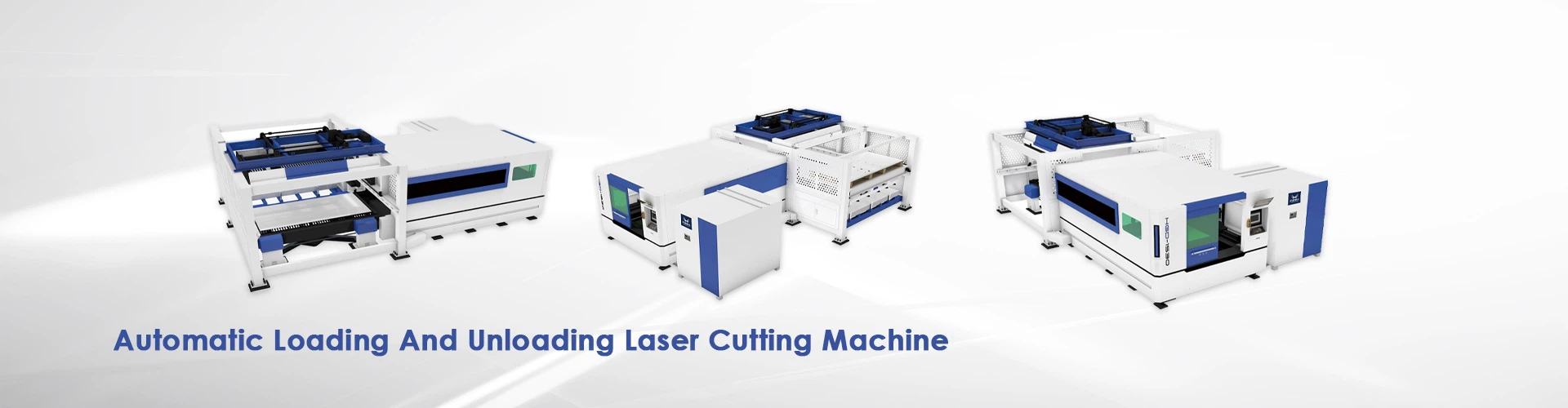
Single Table Fiber Laser Cutting Machine
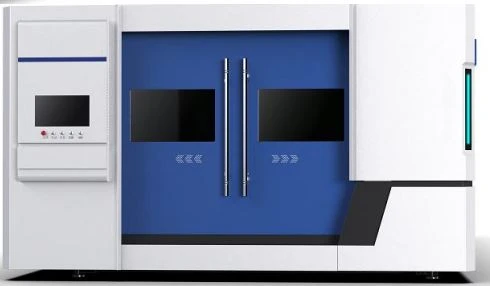
Exchange Table Fiber Laser Cutting Machine
1. Roughness. The laser cutting section will form vertical lines, and the depth of the lines determines the roughness of the cutting surface. The shallower the lines, the smoother the cutting section. Roughness affects not only the appearance of the edge, but also the friction characteristics. In most cases, the roughness needs to be minimized, so the shallower the texture, the better the cut quality.
2. Verticality. If the thickness of the sheet metal exceeds 10mm, the perpendicularity of the cutting edge is very important. As you move away from the focal point, the laser beam becomes divergent and the cut widens towards the top or bottom depending on the position of the focal point. The cutting edge deviates from the vertical line by a few percent of a millimeter, the more vertical the edge, the higher the cutting quality.
3. Cutting width. Generally speaking, the width of the cut does not affect the quality of the cut. It is only when a particularly precise contour is formed inside the part that the width of the cut has an important effect. This is because the width of the cut determines the minimum inner diameter of the contour. of increase. Therefore, in order to ensure the same high precision, the workpiece should be constant in the processing area of the laser cutting machine regardless of the width of the incision.
4. Texture. When cutting thick plates at high speed, the molten metal does not appear in the incision under the vertical laser beam, but sprays out at the back of the laser beam. As a result, curved lines are formed at the cutting edge, and the lines closely follow the moving laser beam. To correct this problem, reducing the feed rate at the end of the cutting process can greatly eliminate the formation of lines.
5. Glitch. The formation of burrs is a very important factor that determines the quality of laser cutting. Because the removal of burrs requires additional workload, the severity and amount of burrs can intuitively judge the quality of cutting.
6. Material deposition. The laser cutting machine sprays a layer of oil-containing special liquid on the surface of the workpiece before it starts to melt the perforation. During cutting, the material does not need to be blown out of the cut, but discharges upwards or downwards can also form deposits on the surface.
7. Dent and corrosion. Depression and corrosion have a detrimental effect on the surface of the cut edge, affecting the appearance. They appear in cutting errors that should generally be avoided.
8. Heat affected zone. In laser cutting, the area around the cut is heated. At the same time, the structure of the metal changes. For example, some metals will harden. The heat-affected zone refers to the depth of the area where the internal structure changes.
9. Deformation. If the cut causes the part to heat up sharply, it will deform. This is especially important in fine machining, where contours and webs are usually only a few tenths of a millimeter wide. Controlling the laser power and using short laser pulses can reduce part heating and avoid deformation.