

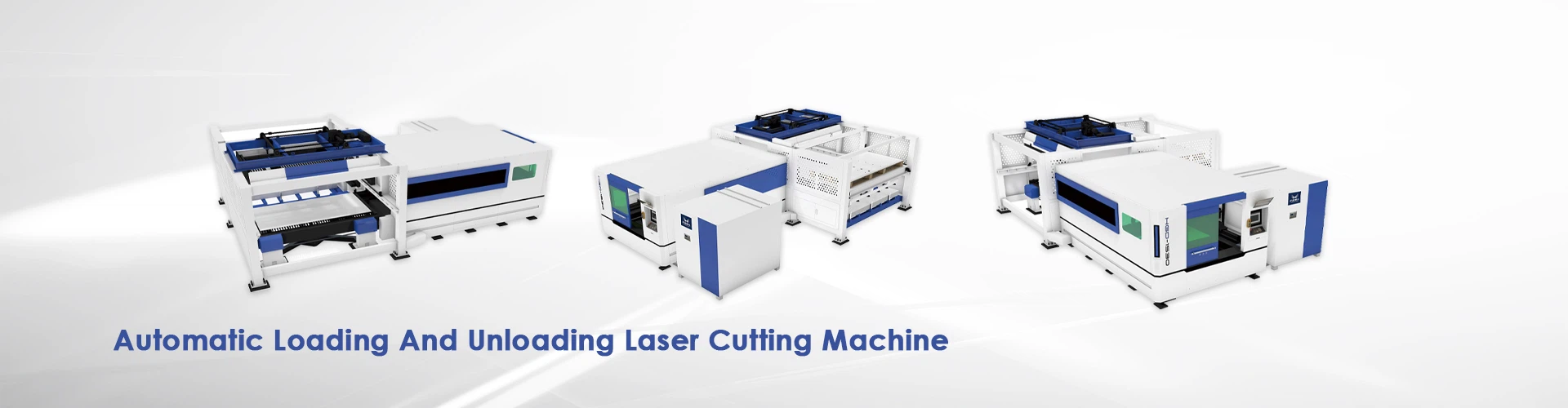
Four Common Laser Cutting Methods
Laser cutting is widely used in the industrial field, fast, one-time molding and smooth section are its main advantages. And laser cutting mainly has four different cutting methods in order to deal with different situations.
1.Melting Cutting
In laser melting cutting, the workpiece is partially melted and then the melted material is ejected with the help of airflow. Because the transfer of material only occurs in its liquid state, the process is called laser melting cutting.
2.Vaporization Cutting
During laser vapor cutting, the surface temperature of the material rises to the boiling point temperature so quickly that melting due to heat conduction is avoided, so part of the material vaporizes into steam and disappears, and part of the material is blown away as an ejector from the bottom of the slit by the auxiliary gas stream. Very high laser power is required in this case.
3.Control fracture cutting
For brittle materials that are easily damaged by heat, high-speed, controllable cutting by laser beam heating is called controlled fracture cutting. The main elements of this cutting process are: the laser beam heats a small area of brittle material, causing a large thermal gradient and severe mechanical deformation in the region, resulting in the formation of cracks in the material. As long as a balanced heating gradient is maintained, the laser beam can be guided to cracks in any desired direction.
4. Oxidative Melt Cutting (Laser Flame Cutting)
Melting cutting generally use inert gases, if replaced by oxygen or other active gases, the material in the laser beam is ignited, and the intense chemical reaction with oxygen and produce another heat source, so that the material is further heated, known as oxidative melting cutting. Due to this effect, the cutting rate obtained by this method is higher than that of melt cutting for structural steel of the same thickness. On the other hand, this method may produce a poorer quality cut compared to melt cutting. In fact, it produces a wider kerf, significant roughness, increased heat affected zone and poorer edge quality. Laser flame cutting carries the risk of burning off sharp corners when machining precision models and sharp corners. Heat effects can be limited by using a laser in pulsed mode, where the power of the laser determines the cutting speed. For a given laser power, the limiting factors are the oxygen supply and the thermal conductivity of the material.
