

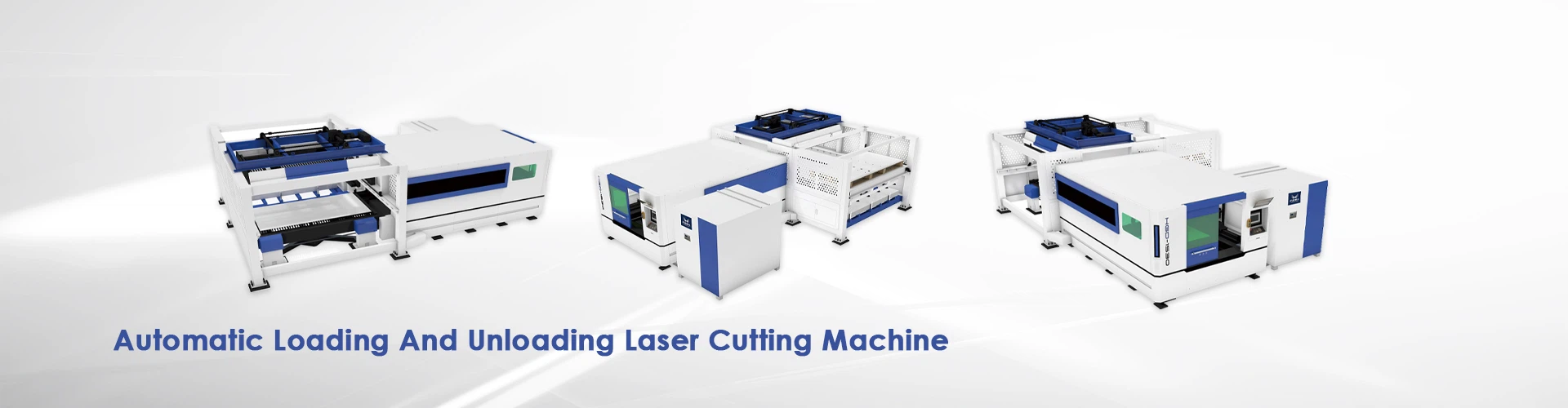
Fiber Laser Cutting Processing
Before any laser cutting equipment works, the focal length of the laser and the cutting material must be adjusted. The difference in focal length often leads to different cutting surfaces of the material.
The cutting focus is located above the surface of the workpiece: this method is also called negative focal length, because the cutting point is not located on the surface of the cutting material or inside the cutting material, but positioned above the material we want to cut. This method is mainly used for cutting materials with relatively high thickness. The reason why the focus is positioned above the cutting material in this way is mainly because the thick plate requires a large cutting width, otherwise the oxygen ji delivered by the nozzle is likely to be insufficient and cause the cutting temperature to drop. But one disadvantage of this method is that the cutting surface is relatively rough, which is not practical for high-precision cutting.
2. The cutting focus is on the surface of the workpiece: this method is also called zero focal length, which is generally common in the cutting of workpieces such as carbon steel plates. When used, the focus of the laser cutting machine is selected close to the surface of the workpiece. The upper and lower surfaces of the workpiece in this mode The smoothness is different. Generally speaking, the cutting surface close to the focal point is relatively smooth, while the lower surface away from the cutting focal point appears rough. This mode should be determined according to the process requirements of the upper surface and the lower surface in the actual application.
3. The cutting focus is below the surface of the workpiece: this method is also called positive focal length. When the workpiece you need to cut is stainless steel or aluminum steel plate, the mode that the cutting point is inside the workpiece is often used. But a disadvantage of this method is that due to the focus principle, the cutting width is relatively larger than the cutting point on the surface of the workpiece. At the same time, the cutting airflow required in this mode is large, the temperature is sufficient, and the cutting and piercing time is slightly longer. So when you choose the material of the workpiece is mainly stainless steel or aluminum with high hardness.There are two main types of mechanical processing: manual processing and numerical control processing.
Manual processing refers to the method of processing various materials by manual operation of mechanical equipment such as milling machines, lathes, drilling machines, and sawing machines by mechanical workers. Manual processing is suitable for small batch and simple parts production. Numerical control processing (CNC) refers to the use of numerical control equipment for machining by mechanical workers. These numerical control equipment includes processing bases, turning and milling bases, wire EDM equipment, thread cutting machines, etc. Most machining workshops use CNC machining technology. After programming, the azimuth coordinates (X, Y, Z) of the workpiece in the Cartesian coordinate system are converted into the programming language. The CNC controller of the numerical control machine tool controls the axis of the numerical control machine tool by recognizing the width and releasing the programming language, and actively removes the data according to the request. , And then get the finished workpiece.Copper is not suitable for laser cutting, and the cut is very thin. Most of titanium, titanium alloy and nickel alloy can be cut by laser.
One type is processing materials used for decoration, advertising, lamps, kitchenware, sheet metal parts, electrical cabinets, elevator panels, engineering boards, and high and low switch cabinets. This type of material is generally thinner, and the thickness is stainless steel steel plate material with a thickness of 1-5mm. , It can be cut with a medium-power laser cutting machine.The second category is cutting plastic (polymer), rubber, wood, paper products, leather, and natural or synthetic organic materials. Since these items are not metal products, they can absorb laser light differently, so this type of material is best used CO2 laser cutting machine for cutting.
The third category is low carbon steel and 12mm stainless steel with a thickness of 8-20mm. This type of material requires a high-power laser cutting machine to cut quickly and instantly. You can consider buying a high-power fiber laser cutting machine or high-power CO2 laser cutting. machine.
Therefore, when we choose laser equipment, we must not only consider the characteristics of our own product materials, but also consider the performance of the laser equipment, so that we can find a laser equipment suitable for our own industry products.The size of the cut feature depends on the thickness of the analysis, and mainly depends on the diameter of the selected nozzle. Further improvements can be achieved by increasing the process air pressure and further increasing the debris formation, but irrelevant oriented debris will form on the bottom side of the workpiece. Generally speaking, the correlation between feature size and nozzle diameter can be solved, as shown in Figure 5. From the perspective of laser cutting design, the thickness of each plate formed by fragments should determine the key feature size and the need to increase the dynamic input of gas to ensure the cutting quality and further reduce the feature size. Laser equipment mainly includes lasers, light guide systems, workbenches, control systems, and safety protection devices. The main components of the light guide system include the shutter, the light east channel, the light turning mirror, the focusing mirror, and the coaxial sighting device. The function of the workbench is to complete various operations to meet the requirements of heat treatment processing, also known as processing machine tools. The control system realizes logic processing through computer photoelectric tracking or wiring logic, and controls the workbench or light guide system to complete the processing according to the required motion track. In addition, the laser cutting processing control system functions also include laser power, scanning speed, shutter, air pressure fan, light source, conduction, safety mechanism and other functions control. The equipment is mainly composed of laser, cooling system, external light guide system of CNC quenching machine tool, stabilized power supply and electric control part.
Laser cutting processing range ①Laser cutting processing has a wide range, which can cut metal materials, such as low carbon steel, tool steel, stainless steel, aluminum and aluminum alloy, etc., and non-metal materials such as cardboard, wood, leather, glass, ceramics, etc. ②Laser cutting processing can not only process different kinds of materials, but also process materials with different thicknesses from thin plates to thick plates. ③Laser cutting can also process parts of different shapes, no matter the shape is simple or complex. The interaction between laser and material The interaction process between laser and material is divided into the following stages: A, athermal or basic optical stage. Since the absorption heat is very low at this stage, it cannot be used for general thermal processing. B. Heating below the phase transition point (TC, heating above the phase transition point but below the melting point (TsD, heating above the melting point but below the vaporization point (TmE, heating above the vaporization point-plasma phenomenon. At this stage) The material vaporizes, forming a plasma.